Why the Importance of Sustainable Crafting Practices Matters

If you’ve spent any time in the crafting world lately, you’ve probably noticed a shift. The conversations happening in Facebook groups, at local craft fairs, and across Instagram feeds have started to include a new kind of question: where did this come from, and what happens to it when we’re done? It’s a quiet revolution, but it’s gaining momentum — and honestly, it’s long overdue.
Sustainable crafting isn’t just a buzzword tacked onto an Etsy listing to attract eco-conscious buyers. It’s a genuine rethinking of how we create, what we consume, and the legacy our hobbies leave behind. Whether you’re a seasoned quilter, a weekend candle-maker, or someone who’s just discovered the joy of macramé, understanding the importance of sustainable crafting practices can transform not just your craft room, but your entire relationship with making things.
Let’s dig into why this matters so much right now — and what you can actually do about it.
The Hidden Environmental Cost of Crafting
Most of us don’t think of crafting as an environmentally heavy activity. We associate pollution with factories and fast fashion, not with someone sitting at their kitchen table knitting a jumper. But the crafting industry — particularly the handmade and DIY sector — has a surprisingly significant environmental footprint.
Consider this: the global craft supplies market was valued at over $45 billion in 2022, and it continues to grow. That’s an enormous volume of materials being produced, packaged, shipped, used, and often discarded. Synthetic fibres like acrylic yarn, for instance, shed microplastics with every wash. Many craft paints and adhesives contain volatile organic compounds (VOCs). Packaging for supplies is frequently excessive and non-recyclable.
Then there’s the problem of waste. Fabric offcuts, paper trimmings, half-used pots of paint, broken tools — the average crafter generates more waste than they might realise. When you multiply that by millions of hobbyists worldwide, the numbers become genuinely sobering.
Fast Craft Culture and Its Consequences
There’s a concept in sustainable fashion circles called “fast fashion” — the rapid production and disposal of cheaply made clothing. Crafting has developed its own version of this. Cheap craft kits, trend-driven supply hauls, and the pressure to keep up with the latest DIY aesthetic on social media have created a culture of accumulation and abandonment.
How many of us have a drawer (or several drawers) full of supplies for projects we started and never finished? Materials bought on impulse, used once, and then forgotten? This pattern isn’t just wasteful — it’s financially draining and, for many crafters, emotionally unsatisfying too. Sustainable crafting practices push back against this cycle in a really meaningful way.
What Does Sustainable Crafting Actually Mean?
This is where things get practical. Sustainable crafting isn’t about being perfect or never buying anything new. It’s about making more conscious decisions throughout the entire crafting process — from the materials you choose to the way you handle leftovers and finished items.
At its core, a sustainable craft practice involves:
- Choosing natural, renewable, or recycled materials wherever possible
- Reducing waste through careful planning, upcycling, and scrap management
- Supporting ethical and local suppliers
- Extending the life of tools and equipment through repair and maintenance
- Considering the end of life of your finished projects
It’s also worth noting that sustainability has a social dimension, not just an environmental one. Buying from small independent suppliers who pay fair wages, or choosing materials that don’t rely on exploitative labour, is part of the picture too.
Natural vs. Synthetic Materials: Making the Switch
One of the most impactful changes a crafter can make is shifting away from petroleum-based synthetic materials towards natural alternatives. This doesn’t mean you need to throw out all your acrylic yarn tomorrow — that would itself be wasteful. But as you naturally use up your stash, you can begin replacing things with more sustainable options.
Wool, cotton, linen, bamboo, and hemp are all natural fibres with significantly lower environmental impact than synthetic alternatives — particularly when sourced responsibly. For paper crafters, look for FSC-certified papers or those made from recycled content. For painters and mixed media artists, water-based, low-VOC paints and adhesives are widely available now and work beautifully.

The Benefits Go Beyond the Environment
Here’s something that often surprises people when they start exploring more sustainable crafting practices: it tends to make the actual crafting experience better. Richer. More meaningful.
When you slow down and think more carefully about your materials — where they came from, how they were made, what qualities they bring to your work — you naturally become more intentional about your projects. You buy less, but what you do buy feels more considered. You waste less, which means you spend less. And there’s something deeply satisfying about knowing that your creative hobby aligns with your values.
Financial Benefits of a Sustainable Approach
Sustainable crafting and frugal crafting often go hand in hand. When you commit to using what you have, upcycling materials, shopping secondhand, and investing in quality tools that last, your craft spending tends to drop considerably. Charity shops, car boot sales, and online swap groups are treasure troves for crafters — you can find beautiful fabrics, quality yarns, and working tools for a fraction of the retail price.
There’s also the question of project value. Items made with sustainable, quality materials and genuine care tend to last longer and hold their value better than those made quickly with cheap supplies. If you sell your work, this can translate directly into better pricing and a stronger reputation.
Practical Steps to Make Your Craft Practice More Sustainable
Knowing that sustainable crafting matters is one thing. Actually making changes in your own practice is another. Here are some genuinely actionable steps you can take, regardless of your craft or skill level.
Audit Your Stash
Before you buy anything new, spend time getting to know what you already have. Many crafters are sitting on a goldmine of materials they’ve forgotten about. Organise your supplies, take stock, and challenge yourself to use up what’s already there before purchasing more. This “stash-busting” approach is both sustainable and creatively stimulating — working with constraints forces you to be inventive.
Embrace Upcycling and Repurposing
Some of the most beautiful craft projects start with something someone else was about to throw away. Old shirts become quilt fabric. Wine corks become wreaths. Cardboard packaging becomes the base for papier-mâché. Broken jewellery gets remade into something entirely new. Training your eye to see the creative potential in “waste” materials is one of the most valuable skills a sustainable crafter can develop.
Research Your Suppliers
This takes a little effort, but it’s worth it. Many small independent craft suppliers are making genuine efforts to operate sustainably — using minimal packaging, sourcing ethically, offsetting their carbon footprint. By choosing to spend your money with these businesses, you’re voting with your wallet for the kind of crafting industry you want to see.
Look for suppliers who are transparent about where their materials come from. Certifications like GOTS (Global Organic Textile Standard), Fair Trade, and FSC (Forest Stewardship Council) are useful signposts, though not the only indicators of responsible practice.
Join Your Local Craft Community
Crafting communities — whether in-person or online — are fantastic resources for sustainable practice. Skills swaps, material exchanges, and group buys can all reduce waste and cost. If someone in your knitting group has a mountain of yarn they’ll never use, and you have more fabric than you know what to do with, a simple swap benefits both of you. Much like joining a book club, being part of a crafting group creates shared accountability and helps good habits feel like second nature.
Community also provides accountability and inspiration. When sustainable practices become a shared value within a crafting group, they start to feel normal rather than exceptional.
Think About the End of Life
Before starting a project, it’s worth asking: what will happen to this when it’s no longer wanted or used? Items made from natural fibres and materials can often be composted, donated, or easily recycled. Synthetic materials are much harder to deal with at end of life.
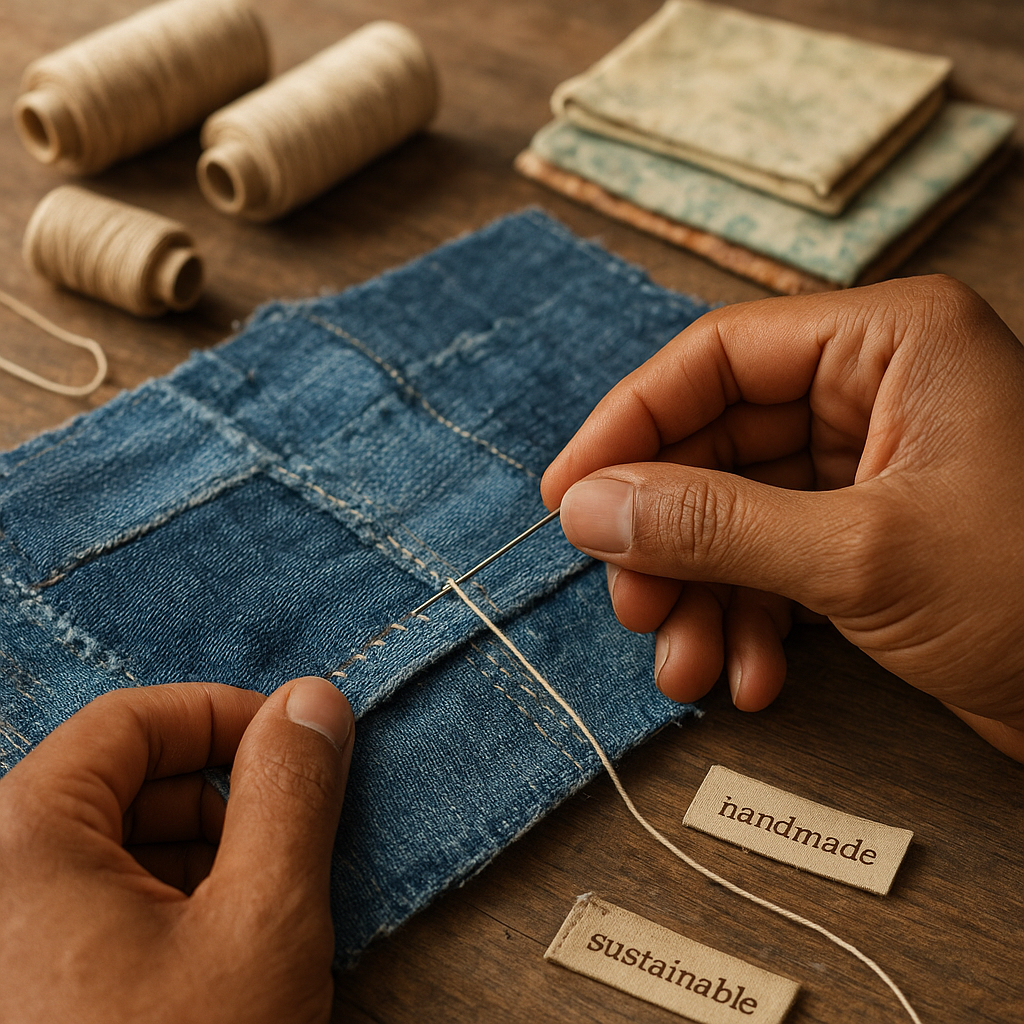
If you’re making gifts or items for sale, this is worth communicating to recipients too. A hand-knitted jumper in natural wool, for instance, can be composted when it finally wears out. That’s a remarkable thing about natural materials that we rarely stop to appreciate.
Is Sustainable Crafting More Expensive?
This is one of the most common questions people ask when they start exploring sustainable options, and it deserves an honest answer: sometimes, in the short term, yes. A skein of organic, ethically sourced wool will typically cost more than a ball of acrylic from a discount shop.
But the full picture is more nuanced. When you buy less overall, buy secondhand more often, invest in quality tools that last for years, and use up what you have rather than constantly buying new, your overall spending on crafting frequently decreases. The initial cost of a sustainable material is often offset by using it more thoughtfully and making something that actually lasts.
There’s also a shifting market to consider. As demand for sustainable crafting supplies grows, prices are becoming more competitive. More options at more price points are appearing all the time. The idea that ethical crafting is purely a luxury pursuit is becoming increasingly outdated.
The Bigger Picture: Why Individual Choices Still Matter
It’s tempting, when faced with the scale of environmental challenges, to feel that individual choices are irrelevant. What difference does it make if one crafter switches to organic cotton if the broader systems of production and consumption remain unchanged?
The answer is that individual choices are part of how systems change. Consumer demand shapes what suppliers offer. The conversations crafters have about sustainability influence the norms of crafting communities. Businesses pay attention to what people buy and why. Every purchase, every social media post about a beautifully upcycled project, every conversation at a craft fair about sustainable materials — these are small acts that collectively add up to something significant.
There’s also something to be said for integrity. Crafting, at its heart, is about making something with care and intention. Extending that care to the materials we choose and the impact we have feels like a natural expression of what crafting is supposed to be about.
Final Thoughts
The importance of sustainable crafting practices lies not just in reducing environmental harm — though that matters enormously. It lies in the opportunity to make our creative lives more meaningful, more connected, and more aligned with the kind of world we want to help build.
You don’t need to overhaul everything at once. Start small: use up your stash before buying new, investigate where your next material purchase comes from, try one upcycling project using something you’d otherwise throw away. Each small step builds a practice that feels genuinely good — for the planet, for your bank account, and for the soul-deep satisfaction that comes from making things with real intention.
After all, the best craftspeople have always known that what you make with, matters just as much as what you make.


0 Comments